Whenever May rolls around and the air begins to smell faintly of methanol and burning rubber, the question inevitably comes up: “Who is your driver?”
It’s a natural question for any sports fan, a casual icebreaker meant to draw battle lines of friendly rivalry. But in the world of IndyCar, where the margins between glory and catastrophe are measured in fractions of an inch and split seconds, giving my heart to a single driver is a luxury I can no longer afford.
My answer usually garners a confused look. “I don’t have one,” I’ll say. “I cheer for the field.” It isn’t a lack of passion that keeps me from wearing a specific driver’s jersey or flying a single number on a flag outside my house. It’s an emotional armor, forged over decades of loving a sport that demands a terrible, unforgiving toll.
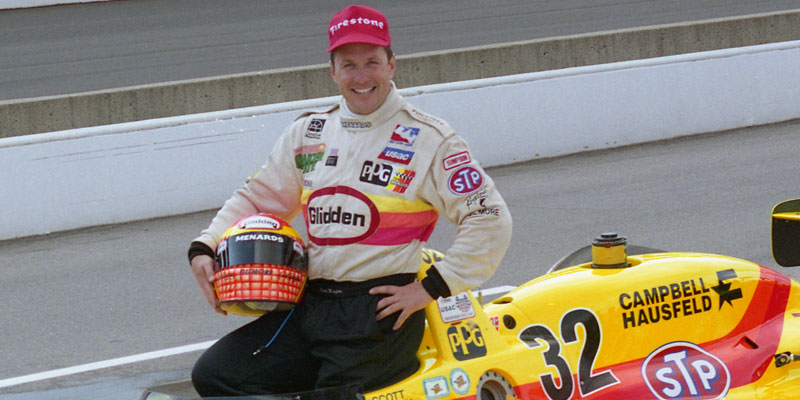
The first crack in that armor happened when I was just a kid. It was 1996, and the Month of May at the Indianapolis Motor Speedway was the center of my universe. Scott Brayton was the man of the hour. He had just captured his second consecutive pole position for the Indianapolis 500. In my young eyes, he was a superhero wrapped in a fire suit, seemingly invincible as he pushed his brightly colored Menard machine to speeds that defied comprehension.
Then came May 17th, 1996. A routine practice session. A punctured tire. A sudden, violent snap into the turn two wall.
When the news broke that Scott was gone, it shattered the illusion of immortality that childhood often assigns to athletes. You realize then that the heroes on the track aren’t playing a game; they are walking a tightrope. That was the first time my heart broke for a favorite, leaving a hollow ache that lingered long after the checkered flag fell that year.
As I grew older, I tried to convince myself that the safety advancements of the modern era had banished those dark days to the history books. And for a long time, it felt that way. I allowed myself to become deeply invested again.
Then came 2011.
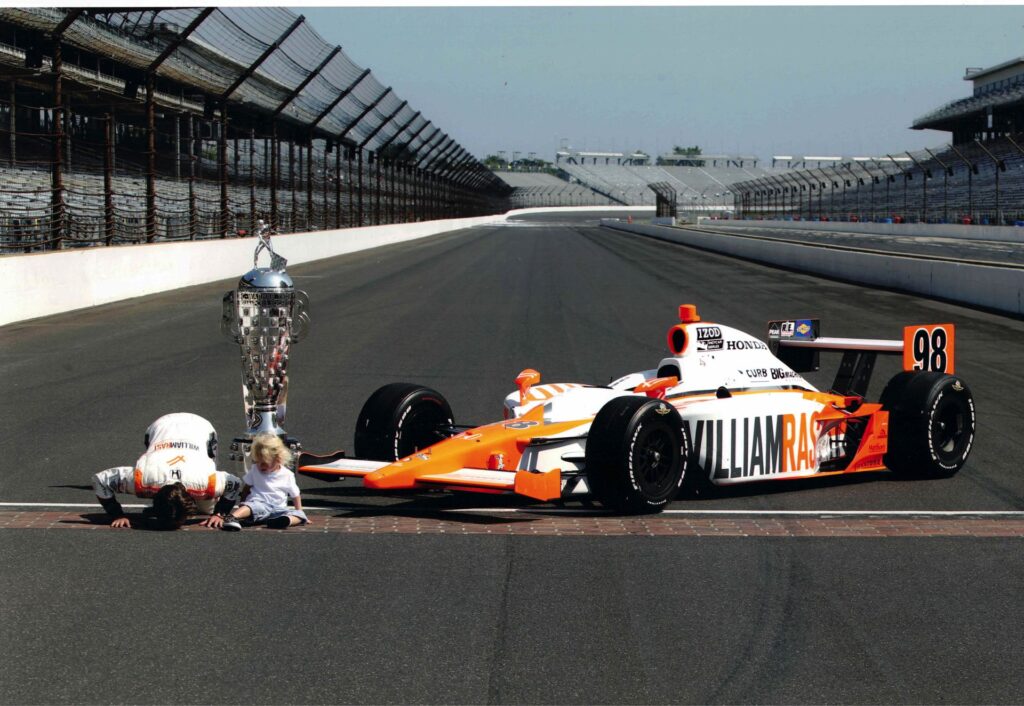
Dan Wheldon was the beating heart of IndyCar. He had a million-watt smile, an infectious charisma, and an undeniable brilliance behind the wheel. He had just won the Centennial Indianapolis 500 in one of the most dramatic finishes in history, a finish that had me speechless. When the series rolled into Las Vegas for the season finale, it was supposed to be a celebration.
Instead, it became a nightmare. The sheer scale of the 15-car pileup, the eerie silence that fell over the track, and the agonizing wait for news under the red flag remain etched in my memory. Losing Dan felt like losing the sport’s brightest light. The grief in the paddock was palpable, bleeding through the television screen and into my living room. It was a brutal, visceral reminder that the monster at the edge of the track had only been sleeping, not defeated.
Two years later, the final blow to my singular fandom landed in Houston.
Dario Franchitti was a master of his craft, a multi-time champion whose smooth, calculating style was a joy to watch. On the final lap of the 2013 Grand Prix of Houston, his car made contact with Takuma Sato, launching Dario terrifyingly into the catch fence. The violence of the impact, the debris raining down, the shredded chassis—it was a scene that made my blood run cold.
We waited, holding our collective breath, praying for a sign of life. Dario survived, but the injuries were severe enough to abruptly and permanently end his legendary career. It was a miraculous escape, but the sheer proximity to tragedy was exhausting.
I realized then that I couldn’t do it anymore. I couldn’t put all my emotional chips on one car. The toll of the anxiety, the heartbreak, and the near-misses was simply too high.
Today, my relationship with IndyCar is different, but it is no less profound. I don’t hold my breath for one specific car to make a pass; I hold my breath for all of them to make it through Turn 1.
When I watch a race now, I am cheering for the breathtaking skill of the overtakes, the brilliant calculus of the pit strategies, and the sheer, unadulterated bravery of thirty-three humans strapping themselves into rockets. I cheer for the veterans mentoring the rookies. I cheer for the underdogs finding an unexpected burst of speed.
But most of all, when the checkered flag waves, I cheer for the fact that everyone is coming home.
I don’t have a favorite driver because I have too much respect for what every single one of them risks when they pull down their visors. I don’t need a single hero to love the sport. I have a whole field of them.
About the Author

Discover more from Speedway Action Magazine
Subscribe to get the latest posts sent to your email.