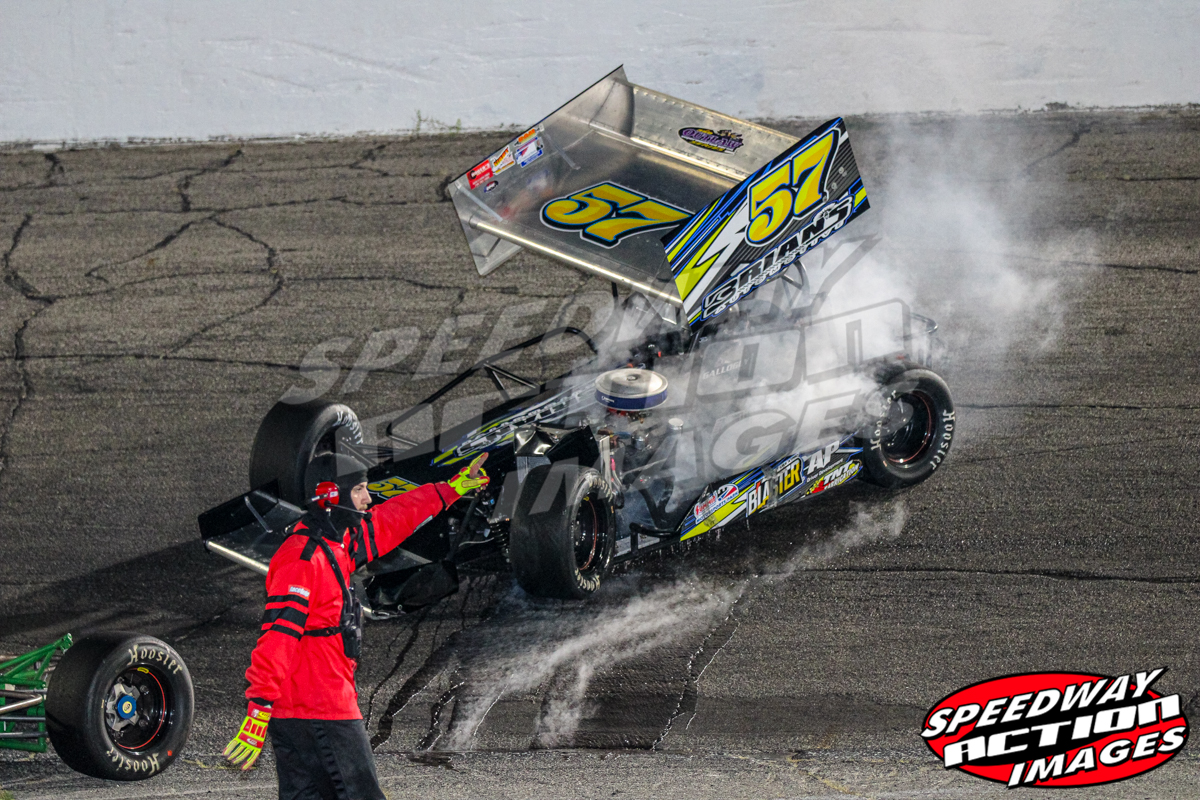
A year ago, we turned our spotlight on the Sharon Speedway Safety Crew, highlighting them as one of the best and most prepared units we had ever seen at a local short track. They set a high benchmark for what trackside emergency response should look like. However, on a recent trip to Anderson Speedway in Anderson, Indiana, we were reminded that the gold standard of track safety isn’t confined to a single facility.
At Anderson, we watched a safety crew operate not just as a team, but as a well-oiled machine.
“Safety is something we take very seriously at Anderson Speedway. With more than 25 races a year and a wide variety of cars competing, our safety team trains and prepares for every situation. We want to make sure they’re ready when it matters most.” -Jared Owen, Anderson Speedway Promoter
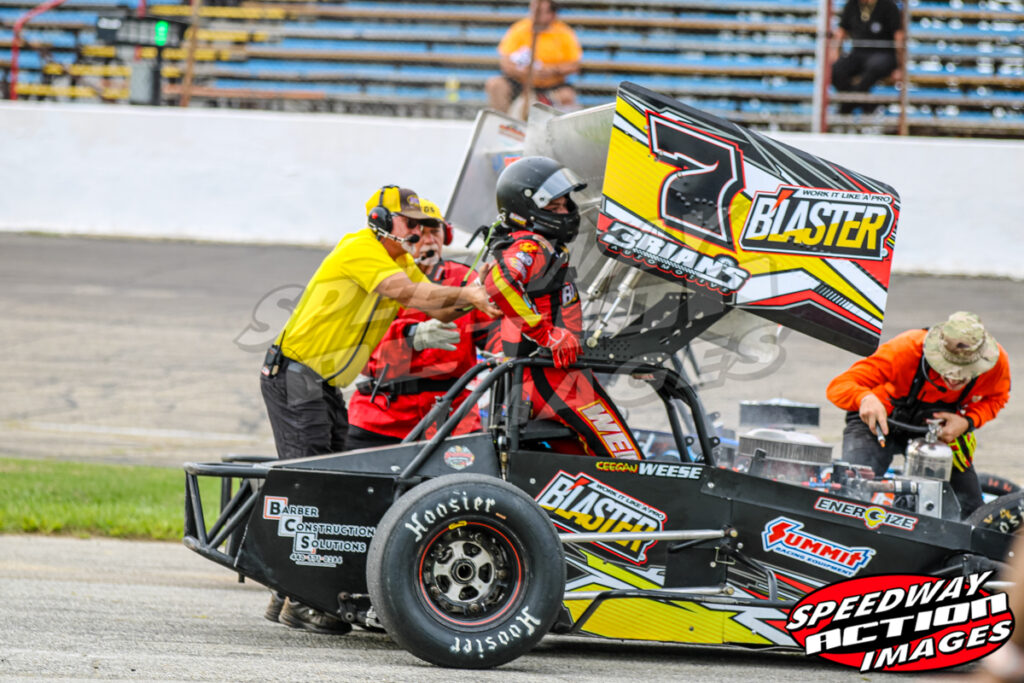
Anatomy of a Well-Oiled Machine
The true test of any safety crew is how they react when the unpredictable happens. During our visit, a car developed a small fire under the hood while on the track. In many local racing divisions, the resulting sequence of events involves the car rolling to a halt, a pause as safety vehicles deploy, and a mad dash to the scene.
At Anderson Speedway, the response was instantaneous. The crew actually reached the distressed car before it could even come to a complete stop.
That level of anticipation and reaction time doesn’t happen by accident. It is the result of meticulous preparation and intelligent trackside logistics. Here is what makes their approach so uniquely effective:
- Role Specificity: There is no hesitation or overlapping confusion when an incident occurs. Every single member of the crew has a specific, designated duty. When the call comes, each person executes their exact role, eliminating the chaotic “who is grabbing what?” scramble that costs precious seconds.
- Strategic Footprints: Instead of relying entirely on a centralized location for fire suppression, the Anderson team has extinguishers pre-staged in various, easily accessible spots across the entire infield. The nearest tool is always just a few steps away.
- Controlled Mobility: While they do utilize a designated Safety Truck for specific jobs and heavier equipment, the vast majority of the crew operates on foot. This means there are no 4-wheelers or ATVs flying erratically across the infield or the track surface. By removing high-speed secondary vehicles from the immediate response, the scene remains strictly controlled, dramatically reducing the risk of a secondary accident involving the safety crew themselves.
“They reached the distressed car before it could even come to a complete stop. That level of anticipation doesn’t happen by accident.” – A fellow photographer
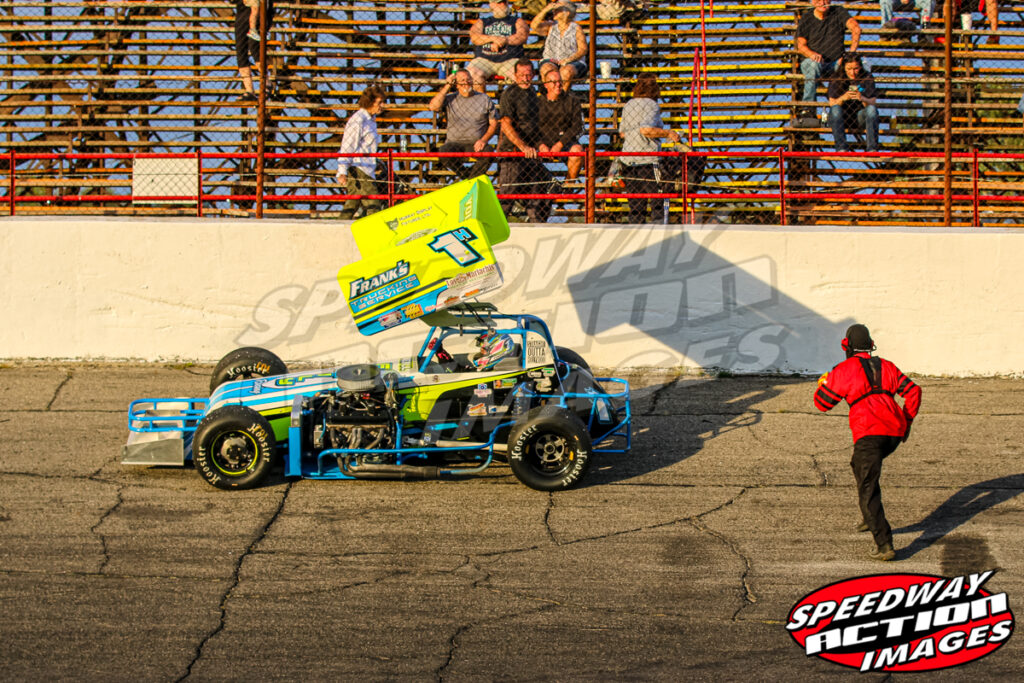
The Ultimate Commitment
Beyond the logistics, the staging, and the specific duties, a track safety crew is fundamentally defined by courage. The Anderson Speedway crew operates with a clear, unspoken guarantee to the drivers on the track: they are entirely prepared to jump directly into a fire to pull a driver to safety should the worst-case scenario arise.
Local short-track racing thrives on the bravery of the drivers willing to strap in and push the limits. But that bravery is entirely dependent on the men and women in the infield standing ready in the fire suits. Just like the crew at Sharon Speedway, the track workers at Anderson Speedway prove that when things go wrong, the right people are ready to make it right.
About the Author

Discover more from Speedway Action Magazine
Subscribe to get the latest posts sent to your email.